
Beni Ouarain rugs: origin, characteristics and how to choose one
With its ecru background, geometric patterns, and generous wool pile, the Beni Ouarain rug has become an essential element of contemporary design. Both understated and graphic, it transcends styles without losing its identity. Originating from the Middle Atlas Mountains of Morocco, this Berber rug stems from a traditional Amazigh craft. Long used primarily for domestic purposes, it is now prized for the quality of its material, the uniqueness of its patterns, and its ability to seamlessly integrate into a wide variety of interiors. But not all Beni Ouarain rugs are alike. From traditional models with black lines on a light background to more colorful, contemporary interpretations, the possibilities are numerous.
How to recognize a Beni Ouarain rug, what criteria to consider when choosing one, and how to integrate it into your decor? Here are our tips.
What is the origin of the Beni Ouarain rug?
The Beni Ouarain rug originates from the Amazigh communities of the Middle Atlas Mountains in Morocco. The name refers to a rug-making tradition associated with several communities in this mountainous region. Originally, these rugs primarily served domestic needs. Their wool and generous thickness allowed them to create insulating and comfortable surfaces in the homes of the cold Atlas Mountains. Their production relies on artisanal know-how passed down through generations. The wool, the weaving techniques, and the design give each piece its unique characteristics.
Beni Ouarain rugs have gradually transcended their original function to become sought-after pieces in the world of decoration and design. Their refined aesthetic, based on material and geometry, partly explains their enduring success.
Even today, they bear witness to the richness of Moroccan craftsmanship while fitting equally well into classic and contemporary interiors.

How to recognize a Beni Ouarain rug?
The traditional Beni Ouarain is distinguished by several characteristics.
An off-white background and geometric patterns
The classic Beni Ouarain rug typically features an ecru, cream, or ivory background, combined with dark motifs, often black or brown. Diamonds, broken lines, intersections, and geometric shapes compose designs whose apparent simplicity allows for a strong emphasis on proportions and intervals. From one rug to another, the motifs may vary in size, rhythm, and arrangement. These variations are part of each rug's unique identity: the design is not perfectly standardized and retains the distinctive characteristics of the handcrafted work.
A generous wool and a characteristic texture
Wool plays a central role in the aesthetics of traditional Beni Ouarain rugs. It gives the rug its texture, relief, and warm appearance. Depending on the piece, the pile can be more or less thick, dense, or supple. These differences influence both the feel and the overall look of the rug. This is also what distinguishes Beni Ouarain from many flat-woven rugs: its texture can add an extra dimension to an interior, even when the design is very simple.
Variations that make each piece unique
Two Beni Ouarain rugs can share the same aesthetic codes while exhibiting subtle differences. The design composition, the wool shades, the proportions, and the details of the weave vary from one piece to another. These particularities give the rug its character and explain why it is important to examine each rug individually.
Traditional or colorful Beni Ouarain rug: which to choose?
While Beni Ouarain is traditionally associated with natural tones and dark patterns, there are now much more contemporary interpretations.

The Beni Ouarain in ecru and black : a graphic classic
With its light background and black patterns, traditional Beni Ouarain adds depth without introducing an overwhelming color palette . It works particularly well in minimalist interiors, natural decors, and spaces where textures play a significant role. Paired with wood, stone, linen, or neutral tones, it creates a balanced look. It can also provide an interesting contrast in a more classically styled interior.
The colorful Beni Ouarain : a contemporary interpretation
The colorful Beni Ouarain rug embraces the codes of this tradition while exploring new compositions. Blue, green, pink, red, orange, or yellow: color transforms the perception of the pattern and gives the rug a more assertive presence. Some pieces retain a highly legible geometric design, while others play with freer lines and unexpected combinations. These interpretations are particularly well-suited to contemporary interiors, minimalist spaces that need a focal point, or decors that embrace color more fully. At Les Tapis Sauvages, our selection includes Beni Ouarain rugs in natural hues, as well as colorful models and contemporary creations.
How to choose a Beni Ouarain rug for your home?
The right rug depends as much on your taste as on the room in which you want to install it.
In the living room
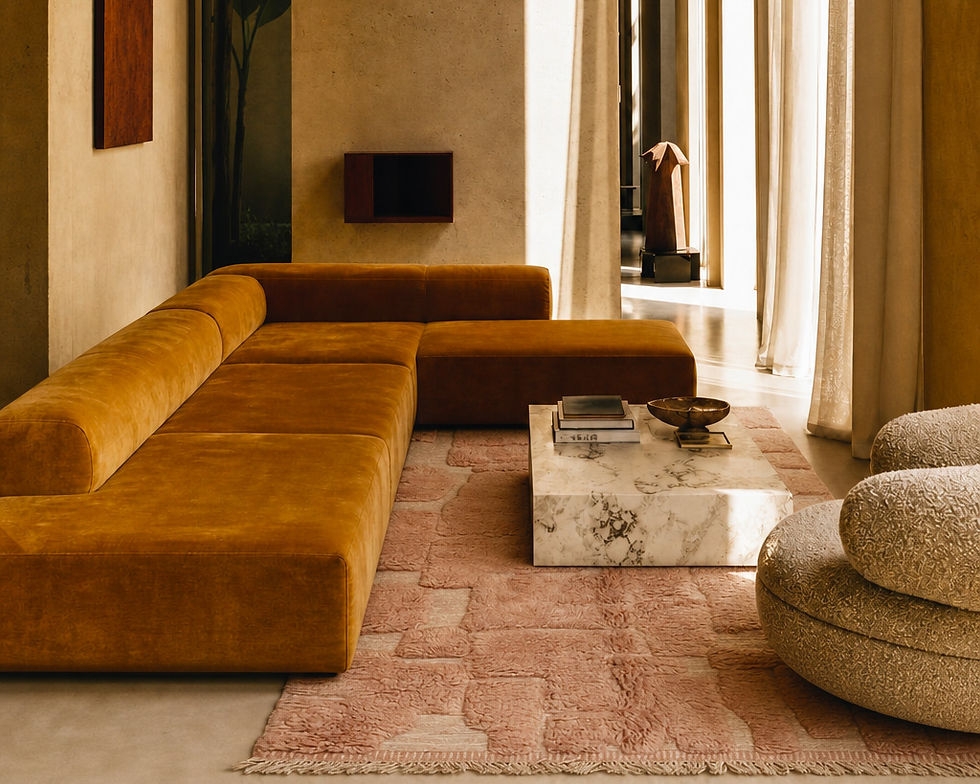
Beni Ouarain rugs are particularly well-suited to the living room, where their texture and design can help structure the space. For a harmonious result, choose dimensions that truly complement your furniture. A rug that's too small risks looking isolated in the middle of the room. In many living rooms, a size large enough to accommodate the coffee table and the front legs of the sofa creates a more cohesive look. An ecru and black will suit a minimalist decor, while a colorful Beni Ouarain rug will add more personality to furniture with simple lines.
In the bedroom
In a bedroom, Beni Ouarain rugs offer a warm texture and a subtle visual presence. Natural-toned rugs pair easily with linen bedding, wood, and neutral colors. A colorful rug, on the other hand, can provide a striking contrast to a more minimalist decor. Consider the flow of movement around the bed and the desired overhang on either side before choosing the size.
In an entryway or an office
Small designs can also add character to an entryway, office, or reading nook. In a smaller space, a simple pattern can structure the floor without overwhelming the decor. It is therefore essential to choose dimensions that are suitable for the flow of traffic and the furniture layout.
How to recognize a quality Beni Ouarain rug
The name Beni Ouarain is very common in the world of interior design. However, the name alone is not enough to assess the quality of a rug. Several criteria deserve your attention.
The material. Examine the composition indicated on the product sheet and pay attention to the feel, texture and appearance of the wool.
The craftsmanship. Slight variations in design, relief, or weave may indicate handmade production. However, they must be appreciated within their context: irregularity is not automatically a guarantee of quality.
The composition of the pattern. Look at the proportions, the rhythm of the lines, and the overall balance of the design. A rug can be very simple yet still have a particularly successful composition.
The finishing touches. The edges, fringes and overall regularity also deserve to be examined.
The overall coherence. The material, dimensions, design, and quality of manufacture must be evaluated together. The price depends in particular on these elements, but also on the uniqueness of the piece.
At Les Tapis Sauvages, we select our Berber rugs for their material, composition and character, with particular attention paid to the quality of each piece.
How to care for a Beni Ouarain wool rug?
A wool rug requires regular care, but a few simple steps will help preserve its appearance. Vacuum it gently, on a low setting and without an aggressive rotating brush, to remove dust without over-stressing the fibers. If a stain occurs, act quickly by blotting it with a clean cloth, without rubbing. Avoid soaking the wool and do not use any cleaning product without first checking its compatibility with the rug.
For deep cleaning, it's best to use a professional experienced with wool carpets. Recommendations may vary depending on the material, dye, and construction of each piece.
Finally, prolonged exposure to sunlight can alter the colors. If possible, avoid direct and continuous exposure, or rotate the rug regularly to minimize discoloration.
Why choose a Beni Ouarain rug from Les Tapis Sauvages?
At Les Tapis Sauvages, we select Beni Ouarain rugs for their quality, proportions, patterns, and unique character. Our collection combines pieces in natural hues, more graphic designs, and colorful interpretations that blend artisanal heritage with contemporary creation. Each rug possesses its own distinct characteristics. We prioritize a discerning selection, choosing pieces that will become timeless additions to any interior rather than simply following a passing trend.
You can discover our collection online or come and compare the rugs in our Parisian showroom, where more than 1,200 Berber rugs are on display.
In summary: which Beni Ouarain rug should you choose?
The traditional Beni Ouarain rug is an excellent choice for those seeking a timeless, graphic, off-white Berber rug. Its dark patterns and rich texture allow it to blend seamlessly into a variety of interior styles. Colored versions offer a more contemporary interpretation, with bolder designs and a more assertive decorative presence. To make the right choice, take the time to consider the material, the quality of craftsmanship, the design, and the dimensions. The best rug isn't necessarily the most spectacular or the most expensive; it's the one whose proportions, texture, and composition suit your space and your needs. Explore our selection of Beni Ouarain rugs and find the perfect piece to give your home its unique character.


Comments